
You know the game. You understand coaching. You prepare properly. So why are you not getting the results you expect?
Because you have fallen into one of these fifteen traps. They are subtle. They feel like good coaching. But they are quietly destroying your players’ development and your own effectiveness.
The most dangerous part? These traps often look like best practice. They are the things coaches do with good intentions that actually undermine progress. Recognising them is the first step to becoming a more effective coach.
Trap 1: The Perfection Prison
The pattern: Demanding flawless execution before advancing to challenging activities. “We cannot move on until everyone can do this perfectly.”
Why it feels right: You want solid foundations. You believe mastery requires perfection. You worry about building on shaky technique.
The damage: Creates technically proficient but pressure-sensitive players. Athletes who perform beautifully in controlled environments collapse when game pressure adds unpredictability.
The solution: Accept approximately 70% success rate in training, with 30% failure driving adaptation. Perfect technique in perfect conditions does not prepare players for imperfect match situations.
Self-check question: “Am I prioritising clean execution over match-realistic challenge?”
Trap 2: The Activity Addiction
The pattern: Filling sessions with constant movement because silence feels like wasted time. Every moment must be “productive.”
Why it feels right: Players are paying for training time. Activity shows engagement. Standing around looks lazy.
The damage: Learning requires reflection periods where athletes process experiences into understanding. Constant activity prevents consolidation of learning.
The solution: Build deliberate pauses into sessions. Ask questions that require thought. Let players discuss what they noticed. Quality of learning matters more than quantity of activity.
Self-check question: “When did players last have 30 seconds to think about what they just experienced?”
Trap 3: The Comparison Trap
The pattern: Using player comparisons for motivation. “Look how Jack does it. Why cannot you do that?”
Why it feels right: Showing a good example seems helpful. Healthy competition motivates. High performers deserve recognition.
The damage: Damages individual confidence and team unity. Players start focusing on teammates’ performances rather than their own development. Creates hierarchies that undermine team cohesion.
The solution: Measure athletes against their previous performances. “Last week you struggled with this. Today you nailed it. That is growth.” Celebrate individual progress, not relative standing.
Self-check question: “Am I building players up individually, or creating winners and losers within my own team?”
Trap 4: The Over-Instruction Epidemic
The pattern: Constant guidance at every moment. Coaching during play. Shouting instructions from the sideline. Never letting a mistake go uncommented.
Why it feels right: You see solutions they do not. Your job is to teach. Silence might mean they repeat errors.
The damage: Creates dependent athletes unable to function independently. Players wait for instructions rather than reading the game themselves. Problem-solving skills atrophy.
The solution: Strategic silence allows players to discover solutions themselves. Save coaching points for natural breaks. Let them struggle productively. The best learning often happens when you step back.
Self-check question: “If I were not here, could my players solve this problem themselves?”
Trap 5: The Drill Dependency
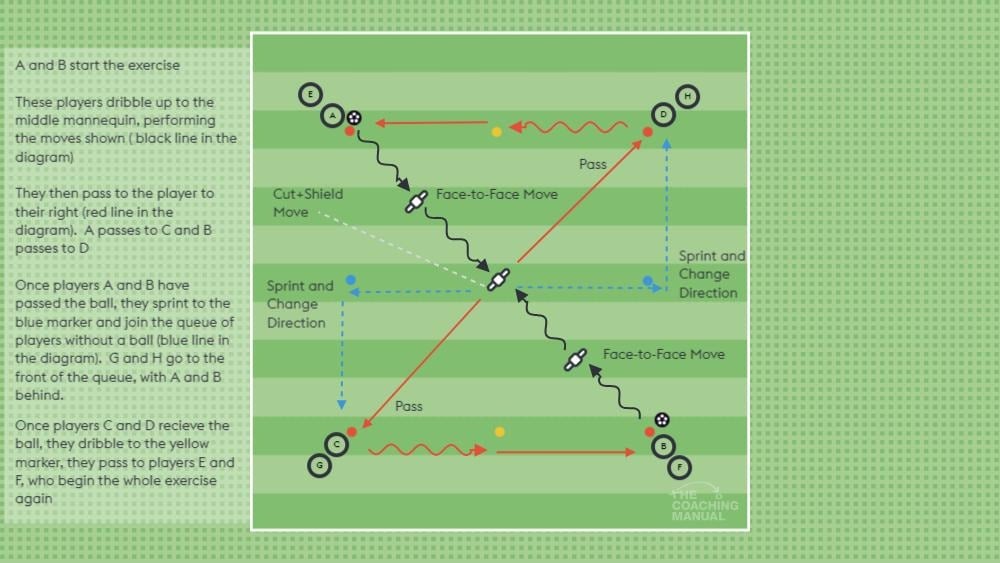
The pattern: Heavy reliance on isolated skill exercises. Passing drills without defenders. Shooting without goalkeepers. Techniques practiced in artificial conditions.
Why it feels right: Breaking skills into components seems logical. Repetition builds muscle memory. Players get more touches in controlled environments.
The damage: Isolated skill exercises rarely transfer to match scenarios involving multiple simultaneous demands. Players can execute perfectly in drills but fail when game complexity arrives.
The solution: Embed skill development within game contexts. Add decision-making to every technical activity. Create problems that require the skill, not just practice of the skill. When drills fail, know how to recover from bad training sessions.
Self-check question: “Does this drill mirror anything that actually happens in matches?”
Trap 6: The Formation Fixation
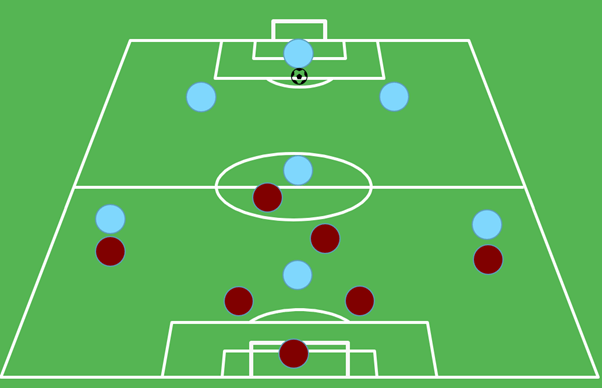
The pattern: Obsessing over positioning rather than tactical principles. Hours spent on shape. Rigid expectations about where players should stand.
Why it feels right: Organisation matters. Professional teams work on shape. Players need to know their positions.
The damage: Creates rigid athletes unable to adapt when game situations do not match the diagram. Football is fluid - formations are starting points, not fixed positions.
The solution: Emphasise underlying principles applicable across formations. Teach “why” we want width, depth, and compactness rather than “stand here.” Principles transfer; memorised positions do not.
Self-check question: “If the game forced us into a different shape, could my players adapt?”
Trap 7: The Win-at-All-Costs Mindset
The pattern: Short-term result focus undermines long-term development. Playing the “best” players in their “best” positions every match. Avoiding risks that might cost results.
Why it feels right: Winning builds confidence. Players enjoy winning. Results matter to clubs, parents, and players.
The damage: Particularly damaging in youth settings where development should outweigh results. Players do not develop in unfamiliar positions. Weaker players never improve. Risk-averse football limits creative growth.
The solution: Establish dual metrics celebrating both victories and skill improvements. Track development markers alongside results. Accept that prioritising development sometimes means accepting short-term defeats.
Self-check question: “Am I making decisions for this season’s results or this player’s future?”
Trap 8: The Comfort Zone Coaching
The pattern: Training within athlete comfort zones because it produces visually pleasing sessions. Drills players can already do well. Pressure levels they can already handle.
Why it feels right: Success builds confidence. Players enjoy activities they can master. Sessions flow smoothly.
The damage: Produces performers who struggle when match conditions exceed familiar territory. Growth requires discomfort. Overcoming challenge builds genuine confidence.
The solution: Systematically introduce progressive challenges. If success rates are above 80%, increase difficulty. Comfort zones should be regularly expanded, not permanently inhabited.
Self-check question: “When did my players last genuinely struggle in training?”
Trap 9: The Single Solution Syndrome
The pattern: Overusing favourite methods regardless of context. The same warm-up every session. The same drills for every problem. The same coaching style for every player.
Why it feels right: Your methods work. Consistency provides stability. If it ain’t broke, do not fix it.
The damage: Reduces effectiveness and ignores individual differences. What works for visual learners fails kinesthetic learners. What energises some players bores others.
The solution: Develop diverse coaching approaches matched to specific needs. Build a toolkit, not a single tool. Vary methods even when content stays consistent.
Self-check question: “Am I coaching the way I prefer, or the way these players learn best?”
Trap 10: The Negative Feedback Loop
The pattern: Emphasising mistakes over accomplishments. Correction-heavy coaching. “No, not like that” more than “yes, exactly like that.”
Why it feels right: You are trying to fix problems. Athletes need to know what is wrong. Being positive without substance feels fake.
The damage: Creates anxious performers prioritising error avoidance over creative risk-taking. Players stop trying new things because failure means criticism.
The solution: Apply three positive reinforcements for every corrective comment. Catch players doing things right. When correcting, frame positively: “Try this” rather than “Do not do that.”
Self-check question: “If players recorded my voice during training, what percentage would be positive?”
Trap 11: The One-Size-Fits-All Approach
The pattern: Identical training for all athletes regardless of learning style, developmental stage, or individual needs.
Why it feels right: Fairness means treating everyone equally. Differentiation is complicated. One strong session should work for everyone.
The damage: Ignores learning style differences. Visual learners struggle with verbal instruction. Kinesthetic learners need to feel movements, not watch demonstrations.
The solution: Customise methods to match individual preferences and development needs. Provide information in multiple formats. Allow different pathways to the same outcome.
Self-check question: “How would I describe this differently to my most visual learner versus my most kinesthetic learner?”
Trap 12: The Impatience Trap
The pattern: Changing methods too quickly because results are not immediate. New approaches abandoned after two sessions. Constant searching for the “magic” solution.
Why it feels right: Something is not working. Adaptation shows responsiveness. New ideas might work better.
The damage: Prevents approaches from working effectively. Learning takes time. Abandoning methods before they mature means you never find out if they would have worked.
The solution: Commit to systematic plans for appropriate timeframes. Give new approaches 4-6 weeks minimum. Document what is working and what is not before changing direction.
Self-check question: “Am I changing because this approach has failed, or because I have not seen instant results?”
Trap 13: The Knowledge Hoarding
The pattern: Withholding advanced concepts because players “are not ready.” Keeping tactical complexity from younger players. Deciding what athletes can and cannot understand.
Why it feels right: You do not want to overwhelm them. Basics must come first. They need to earn advanced knowledge.
The damage: Underestimates athlete capability. Young players can understand sophisticated ideas when presented appropriately. Holding back information holds back development.
The solution: Introduce sophisticated ideas in simplified formats allowing gradual complexity growth. Trust players with knowledge. Let them surprise you with what they can grasp.
Self-check question: “Am I underestimating what my players could understand if I explained it well?”
Trap 14: The External Validation Addiction
The pattern: Coaching for external impressions rather than athlete development. Worrying about what other coaches think. Prioritising how sessions look over what they achieve.
Why it feels right: Reputation matters. Professional appearance shows competence. Being respected opens opportunities.
The damage: Serves ego over growth. Players become secondary to coach image. Decisions get made for the wrong reasons.
The solution: Evaluate success through long-term improvement and engagement. Focus on what players are learning, not what observers are seeing. The best validation is player development.
Self-check question: “Would I coach this session differently if nobody was watching?”
Trap 15: The Isolation Error
The pattern: Attempting to solve all challenges independently. Not seeking help. Believing you should have all the answers.
Why it feels right: Asking for help feels like admitting weakness. You are supposed to be the expert. Other coaches might judge you.
The damage: Prevents accessing valuable collaborative perspectives. Blind spots remain hidden. Problems that others have solved get repeatedly re-discovered.
The solution: Seek mentoring and coaching community engagement. Connect with other coaches. Share challenges openly. The best coaches are constantly learning from others.
Self-check question: “When did I last ask another coach for advice or feedback?”
Self-Assessment: Identifying Your Traps
Use this quick assessment to identify which traps you are most susceptible to:
| Category | Signs You are Trapped |
|---|---|
| Control Traps (1, 4, 6) | Sessions feel scripted; players look to you for every decision |
| Development Traps (2, 5, 8) | Players perform well in training but struggle in matches |
| Relationship Traps (3, 10, 11) | Some players seem to disengage or lose confidence over time |
| Mindset Traps (7, 12, 14) | You feel anxious about results or how you are perceived |
| Growth Traps (9, 13, 15) | Your coaching has not evolved significantly in the past year |
Moving Forward
Here is the good news: now that you can see these traps, you can avoid them. Systematically working through this list enables you to:
- Develop independent thinkers rather than instruction-followers
- Achieve faster individual development
- Create more enjoyable experiences for everyone involved
- Build players who can perform under match pressure
- Grow as a coach yourself
The difference between good coaches and great coaches is not talent or knowledge. It is the willingness to recognise these patterns in themselves and make changes.
Which trap are you falling into right now?
Frequently Asked Questions
How do I know which traps I am falling into?
Ask trusted colleagues to observe your sessions. Record yourself coaching and watch it back. Notice patterns in player behaviour - if players look to you before every decision, you might be over-instructing. If they perform well in training but struggle in matches, you might be trapped in drill dependency or comfort zone coaching.
Can I fall into multiple traps at once?
Absolutely - most coaches have 3-5 traps they are prone to. They often cluster: over-instruction tends to accompany the perfection prison; win-at-all-costs often comes with comparison traps. Identify your core traps first, then notice how they connect.
How long does it take to break these patterns?
Breaking a deeply ingrained coaching habit typically takes 6-8 weeks of conscious effort. The pattern is: awareness (recognising the trap in action), interruption (catching yourself before falling in), replacement (using a better approach), and automaticity (the new approach becomes natural).
Are these traps different for different age groups?
The traps remain the same, but their severity varies. The perfection prison is most damaging with young players who need freedom to explore. The win-at-all-costs trap intensifies as players get older and stakes increase. But all 15 can damage players at any age.
What if I recognise these traps in other coaches?
Focus on your own development first. If asked for feedback, frame observations carefully - “I noticed you gave a lot of instructions during that drill. Have you experimented with letting them figure it out?” Direct criticism rarely helps. Model better approaches instead.
How do I balance avoiding these traps with maintaining standards?
These traps are not about lowering standards - they are about raising them intelligently. High expectations plus effective methods produce better results than high expectations plus counterproductive habits. Avoiding the perfection prison does not mean accepting poor quality; it means building quality through appropriate challenge.
Want to avoid these traps permanently? The Coach’s Compass gives you a systematic framework that naturally prevents most of these mistakes. And for ongoing support and accountability, join the Football Coaching Academy where 1,800+ coaches help each other recognise blind spots and build better habits. Free to join.